Golden Hour, Bitter Glass: The Case for Drinking Negronis in Daylight
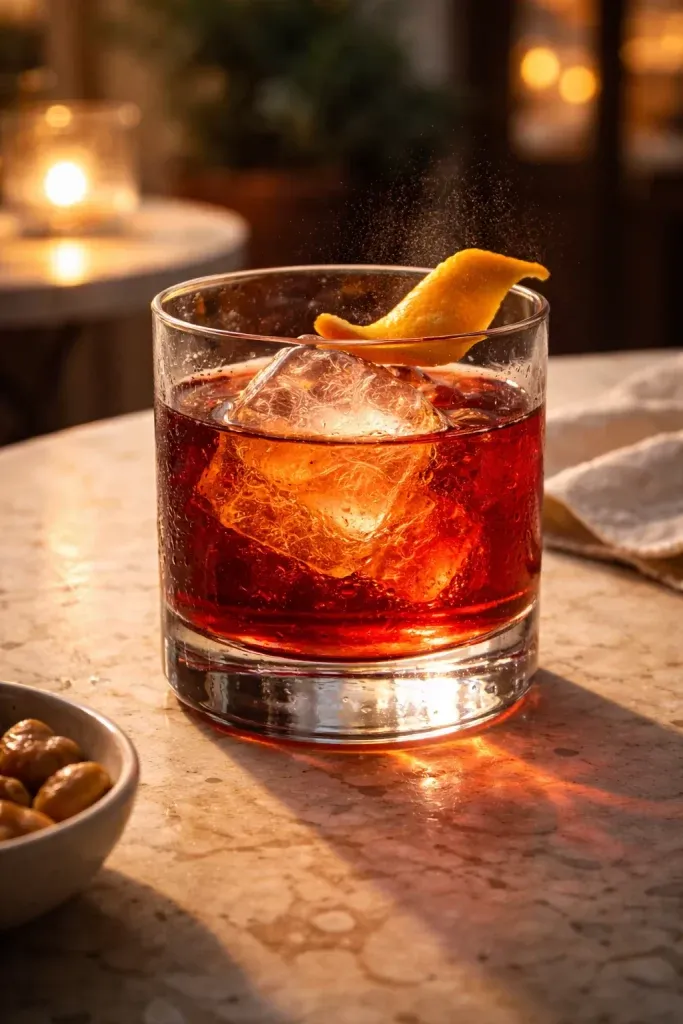
Somewhere along the way, we collectively agreed that a Negroni is a night drink. It shows up in moody photographs — dark wood, low amber light, someone in a turtleneck gazing pensively at a rocks glass. It's become shorthand for sophisticated melancholy, the cocktail equivalent of a Billie Holiday record.
And honestly? That framing undersells it. The Negroni is an aperitivo, and aperitivo is a daylight tradition. In Milan, nobody waits for the sun to set to order one. They drink it at 5:30, in the open air, with a plate of something salty and the evening still stretched ahead of them. The bitterness that feels brooding at midnight feels bright, almost citrusy, at four in the afternoon. Same glass. Completely different drink.
Sunlight Changes the Chemistry of the Experience
There's a practical reason the Negroni thrives before dinner. Bitter compounds — the gentian, the rhubarb, the Cinchona-adjacent bite in Campari — do something genuinely useful on an empty-ish stomach: they wake up your appetite. That's the entire historical point of aperitivo. Bitterness is the palate's alarm clock. Drink it at 11 p.m. after a heavy dinner and you're just adding alcohol to a full tank. Drink it at 4:45 on a Saturday while the roast chicken rests, and it's doing exactly the job it was invented to do.
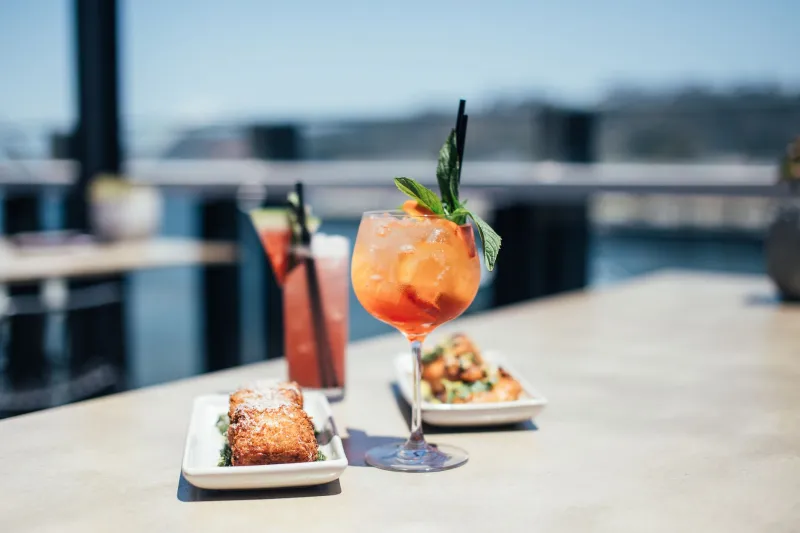
Daylight also does something flattering to the drink itself. Campari's color — that impossible red-orange — looks like a stained-glass window when the sun hits it. In a dim bar it reads as dark and serious. On a porch table at golden hour, it glows. Set one down in front of a guest on a bright patio and watch them reach for their phone before they reach for the glass.
The Daylight Serving Rules
If you're pouring Negronis before the sun goes down, a few adjustments make all the difference:
- Go lighter on the ice, and faster on the pour. A daytime Negroni can afford to be a touch more refreshing — build it over one large cube rather than a glass full of crushed ice, so it stays cold without going watery while people linger.
- Embrace the orange, aggressively. A fat wedge of orange, squeezed slightly as you drop it in, lifts the whole drink toward citrus and away from weight. At night, the garnish is decoration. In the afternoon, it's a functional ingredient.
- Consider the Sbagliato move. Swap the gin for prosecco and you've cut the proof nearly in half — which matters when your guests have a whole evening and a whole next morning ahead of them. The sparkle also suits the setting. Nobody has ever regretted bubbles at a brunch.
- Serve it colder than feels necessary. Chill the glass if you're hosting. Warm daylight and a lukewarm Negroni is the one combination that betrays the format.
What to Put on the Table at 4 P.M.
Evening entertaining carries a certain weight — you're feeding people dinner, which means cooking, which means a plan. A daytime aperitivo lets you off the hook. The food should be a supporting act: briny, salty, easy.
Fried olives are the undisputed champion here. A bowl of Castelvetranos works too, if frying feels ambitious for a Sunday. Marcona almonds, a hunk of good Parmesan with a knife stuck in it, potato chips poured into an actual bowl (the chip-bowl move is criminally underrated), and something bright — citrus-marinated fennel, or simply orange segments with a pinch of flaky salt. The bitterness of the drink and the salt of the snacks create a loop that keeps both going. This is by design. It's why you can sit with one Negroni for two hours and never feel like you've finished it.
Hosting Without the Stakes
Here's the real argument for the daytime Negroni: it lowers the cost of hosting to almost nothing. No dinner to cook, no playlist to perfect, no cleaning the bathroom at 11 a.m. in a panic. You tell four people to come by between four and six. You put out olives and a bottle of gin, three bottles of equal-parts partners, and a bucket of ice. If nobody comes, you've lost nothing — you have olives and a Negroni on a Sunday afternoon, which is not a tragedy.
And the morning-after math is kinder, too. A four o'clock drink is metabolized by bedtime. Nobody's canceling Monday plans. The aperitivo hour ends the way it should: with guests wandering home while the light is still good, slightly hungry, planning dinner.
The Italians understood something we're still catching up to — that the best drink of the day is the one that opens it, not the one that closes it. So this weekend, skip the reservation. Make the Negroni while the sun is low and warm, put the orange in hard, and eat too many olives on a porch somewhere.
Some drinks are for the night. This one was always meant for the light.