What You Pour Before Dinner Tells Me Everything: The Unspoken Psychology of the Aperitivo Menu

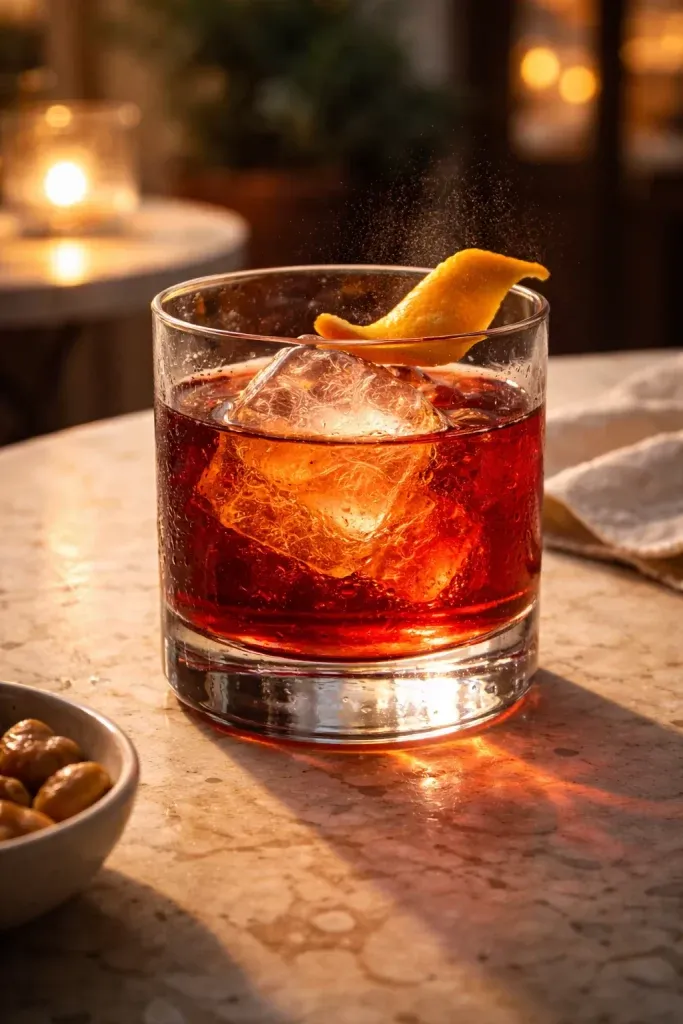
Photo: elegant Negroni cocktail on marble counter at dinner party, moody warm lighting, via thumbs.dreamstime.com
You can learn more about a person in the first ten minutes of arriving at their home than you can over three hours of dinner conversation. Not from what they say. From what they pour.
I've been cataloguing this theory for years, quietly, the way an anthropologist might. Walk into any American dinner party and glance at the pre-dinner setup. What you find there is a confession — a small, bitter, garnished confession — about exactly how that host sees you.
The Buffet of Anxiety
We all know this host. The one whose kitchen counter looks like the back bar of a hotel that just got a renovation loan. Four kinds of gin. A mezcal "for the adventurous." A sparkling rosé, a still rosé, a pét-nat they mention is from a small import in Brooklyn. Seltzer, tonic, three vermouths, a bottle of Aperol and a bottle of Campari because they weren't sure which direction you'd want to go.
This is not generosity. I'm sorry to be the one to tell you. This is fear wearing a linen apron.
The sprawling options bar says: I don't know you well enough to decide, and I'm terrified you'll notice. It outsources the choice to the guest, which feels like hospitality but is actually delegation. It's the dinner-party equivalent of handing someone a menu with sixty items on it and calling it service. Nobody has ever felt cared for by a Cheesecake Factory menu. They've felt overwhelmed by one.
The Case of the Single Negroni
Now consider the other host. You arrive, you're handed a glass before your coat is fully off, and the glass contains a Negroni. Not a question. Not a consultation. A Negroni — stirred, cold, properly diluted, with one large cube and a strip of orange peel that was clearly cut with intention.
Something remarkable happens here. The decision-making is over. You didn't have to perform a preference. You didn't have to scan a shelf and pick the thing that makes you look like the kind of person who drinks pét-nat. You were given something, and the something is excellent, and now you can actually talk to people.
I once went to a small dinner in Chicago where the host greeted each guest at the door with a tray of exactly two drinks: a Negroni or a glass of sparkling wine. That's it. Two options, offered with total confidence, like you'd been asked weeks ago and this was simply the answer arriving on time. The whole room relaxed. There's a specific kind of ease that comes from being decided for, well.
Contrast that with a party in Los Angeles where I stood in front of a thirty-bottle bar cart for so long that I missed the first round of conversation entirely. I mixed myself something I didn't even want. I drank it out of obligation. That host spent four hundred dollars at BevMo and I remember nothing about the evening except the paralysis.
Why Bitter Before Dinner Is the Right Answer Anyway
Here's the part that makes the restraint argument not just aesthetic but correct: the aperitivo exists for a reason. Bitter, low-ish-ABV drinks before a meal wake up the appetite and slow you down. Campari, the bitter Italian backbone of the Negroni, has spent a century proving that appetite is a better opening act than intoxication.
A host who serves one Negroni is also, whether they know it or not, pacing the evening. Nobody's three Negronis deep by the time the burrata comes out. The drink has a built-in ceiling and a built-in runway. It hands everyone the same starting line.
What Restraint Actually Communicates
The one-drink host is saying something the options-bar host never can: I thought about you specifically. A single perfect Negroni means the host considered what the evening needed and committed. Commitment is intimacy. A menu is a transaction.
So the next time you're planning a dinner, resist the urge to stock for every hypothetical guest. Buy one good gin, one good sweet vermouth, one Campari. Cut the orange peels before anyone arrives. Make the drinks in advance, keep them cold, and hand them over like you mean it.
Your guests won't remember the variety. They'll remember how it felt to be handed exactly the right thing by someone who wasn't afraid to choose for them.